Using glycolic acid to combat body odor is not a new idea.
Beauty bloggers and early Reddit threads were talking about it as far back as 2018, but social media scaled the behavior into a trend. The Ordinary’s Glycolic Acid Toner was designed for facial skincare, but consumers increasingly repurposed it to combat body odor, breakouts, and other concerns.
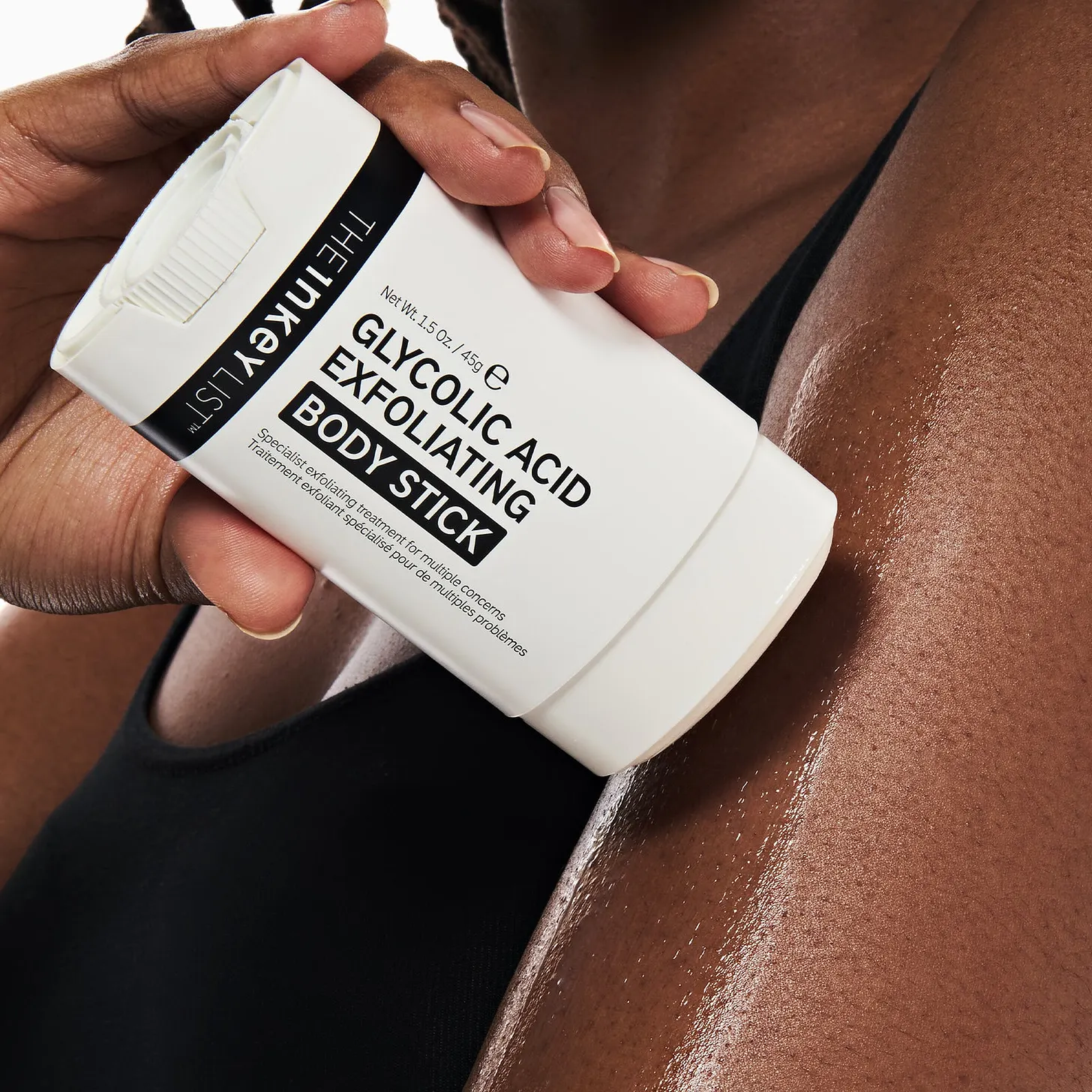
Now, The Inkey List has launched a Glycolic Acid Exfoliating Body Stick.
The interesting part is not that glycolic acid made its way into another product. It’s how consumer and market dynamics, alongside the brand strategy, created the conditions for the product to make sense.
The Consumer Dynamic Was Already There
When consumers repeatedly use a product for something it was not specifically designed to do, the workaround itself becomes the insight.
In this case, consumers already understood glycolic acid. They had experience with the ingredient, knew the benefits they associated with it, and had developed additional uses for it beyond facial skincare. That removes one of the harder parts of introducing a new product, which is educating consumers on why they need it.
However, that existing consumer behavior also reveals friction.
A liquid facial toner can perform the job consumers want, but the product format was not originally designed for body application. A stick formalizes the behavior in a way that is easier to apply, easier to control, and more intuitive to use on the body.
The ingredient does not have to become new again. The product experience does.
Facial Skincare Expectations Were Expanding into Body Care
The emerging consumer behavior also sits within a larger market shift.
Many of the expectations once concentrated in facial skincare have been expanding into body care. Consumers increasingly expect body care products to address concerns such as texture, breakouts, uneven skin tone, and visible signs of aging with the same ingredient-led approach that they already understand for the face.
That changes what body care is expected to do.
It also creates more opportunities for familiar skincare ingredients to be reformatted for different areas of the body without requiring an entirely new efficacy story.
Glycolic acid already had ingredient recognition, making the body care category more receptive to its existing benefits in a different format.
The Market Had Already Normalized the Format
Solid body-care formats had already been expanding across different consumer needs.
- Lume normalized full-body odor products.
- Megababe popularized the stick format to address to thigh chafing and friction.
- Fur adapted the format for intimate care and ingrown-hair concerns.
- Dove expanded further into full-body deodorant products signaling the market shift.
- Hanni extended solid application into shaving and moisturizing.
- Being Frenshe introduced solid body serums into mass retail.
These products solve different problems, but collectively they have taught consumers something important:
A stick can be a full-body delivery system, not just a deodorant format.
The Inkey List does not have to introduce glycolic acid and an unfamiliar application behavior at the same time. The consumer already knows the ingredient, while the broader market shift already made the format increasingly intuitive.
The product can therefore feel new without requiring the consumer to learn how to use it.
Why the Launch Makes Sense for The Inkey List
The Inkey List already operates through ingredient-led skincare. Glycolic acid fits as an ingredient its consumer already understands, while the brand’s existing body-care products establish precedent for treating body concerns through facial skincare ingredients.
The Glycolic Acid Exfoliating Body Stick provides a different application experience without requiring the brand to abandon its positioning.
It also lives alongside the brand’s existing PHA Body Water Cream without cannibalizing its body care portfolio. One supports everyday all-over hydration and lighter exfoliation for maintenance, while the Glycolic Acid Exfoliating Body Stick provides consumers more targeted exfoliation for specific concerns.
That creates a cohesive product portfolio while maintaining differentiation.
The launch therefore does more than capitalize on a viral trend. It translates observed consumer behavior into a product that makes sense within the brand’s broader body-care strategy.
Productizing the Hack
The product opportunity becomes clearer when all the signals connect.
- Consumer Behavior already validated its use case.
- Market dynamics made solid body-care formats increasingly familiar.
- Category dynamics supported the expansion of facial-skincare ingredients and benefits into body care.
- Brand dynamics gave The Inkey List a credible reason to commercialize the ingredient into a new product format.
Because the product opportunity existed at the intersection of all four, the product development question was not about reinventing glycolic acid. It was:
How do you design a better product around what consumers are already doing with it?
Changing the format from liquid to solid addresses application and dosage. Ingredient recognition reduces the education required, and the stick format makes targeted body use intuitive. Existing consumer behavior had already demonstrated that the use case was relevant.
The innovation was not necessarily in the ingredient itself. It was in recognizing when the consumer behavior was ready to become a product.
New Formats Can Reframe Familiar Products
Solid skincare formats are not new. K-beauty brands introduced pressed serums years earlier, taking a familiar skincare product and presenting it through a different format.
The product proposition did not necessarily depend on discovering a new skincare need. Part of the novelty came from changing how the consumer encountered and applied something they already understood.
The product formats are different, but the underlying pattern is similar. What initially feels novel can eventually become another understood way of using the category.
That’s how product format innovation can create new product opportunities without requiring brands to reinvent the underlying science.
Consumer Behavior Can Become Product Development Signals
Consumer behavior and trends can be a new entry signal for future product innovation.
When people repeatedly “hack” an existing product, the behavior reveals a need the market has not yet addressed. The opportunity becomes more meaningful when consumer, market, and category dynamics align with the brand strategy.
When a product like the Glycolic Acid Exfoliating Body Stick launches, consumers have already done part of product validation themselves because they know the ingredient, understand the format, and have been iterating on its use case.
The opportunity for product development is recognizing when that consumer behavior has become meaningful enough to build a product.
—by THE BUILD BRIEF